Your Complete Guide to the Island’s Wine Country
Picture yourself winding through mountain roads lined with ancient stone villages, stopping at a family-run winery where the owner pours you a glass of wine made from grapes that have grown on these slopes for 5,000 years. The Mediterranean sun warms your face as you gaze across terraced vineyards cascading down to the sea. This isn’t a scene from a travel brochure. It’s just another afternoon experiencing wine tourism in Cyprus.
After spending years exploring wine regions from Napa to Bordeaux, I can tell you that Cyprus offers something refreshingly different. There’s no pretension here, no velvet ropes or appointment-only tastings. Just passionate winemakers, ancient traditions, and some of the most stunning scenery you’ll find in any wine region worldwide.
In this guide, I’ll show you everything you need to plan an unforgettable wine tourism experience in Cyprus. From the best regions to visit and how to navigate the wine routes, to practical tips on booking tastings and where to stay, you’ll discover why this small Mediterranean island is becoming one of Europe’s most exciting wine destinations.
Why Cyprus Should Be Your Next Wine Tourism Destination
Before we get into the logistics, let me give you five compelling reasons why wine tourism in Cyprus deserves a spot on your travel bucket list.
Ancient Heritage Meets Modern Innovation
Cyprus has been producing wine for over 6,000 years, making it one of the world’s oldest wine regions. But this isn’t a museum piece. A new generation of winemakers trained in France, Australia, and California has returned home to apply cutting-edge techniques to indigenous grapes. You get history and innovation in the same glass.
Ungrafted Vines and Unique Grapes
Cyprus is one of the few places in Europe where phylloxera never arrived. The vines here are ungrafted, growing on their own roots just as they have for millennia. Combined with indigenous varieties like Xynisteri, Maratheftiko, and Mavro that exist nowhere else on Earth, you’re tasting wines you literally cannot find anywhere else.
Spectacular Mountain Scenery
Most Cyprus vineyards sit between 400 and 1,500 meters above sea level in the Troodos Mountains. The scenery is breathtaking: terraced vineyards, Byzantine monasteries, traditional stone villages, and panoramic views that stretch to the Mediterranean. It’s wine country that looks like a postcard.
Authentic, Personal Experiences
Forget corporate tasting rooms and scripted tours. Most Cyprus wineries are small, family-run operations where you’ll often meet the winemaker personally. They’ll walk you through their vineyards, show you their cellars, and share stories passed down through generations. It’s intimate, authentic, and genuinely memorable.
Exceptional Value
Wine tourism in Cyprus offers incredible value compared to other European wine regions. Quality tastings cost €10-20, excellent wines sell for €12-25 per bottle, and you can enjoy a full day of winery visits without breaking the bank. You get premium experiences at accessible prices.
The Seven Wine Routes of Cyprus
The Cyprus Tourism Organisation has mapped out seven official wine routes that wind through the island’s wine regions. Each route takes you through picturesque villages, past historic sites, and to multiple wineries. Here’s what you need to know about each one.
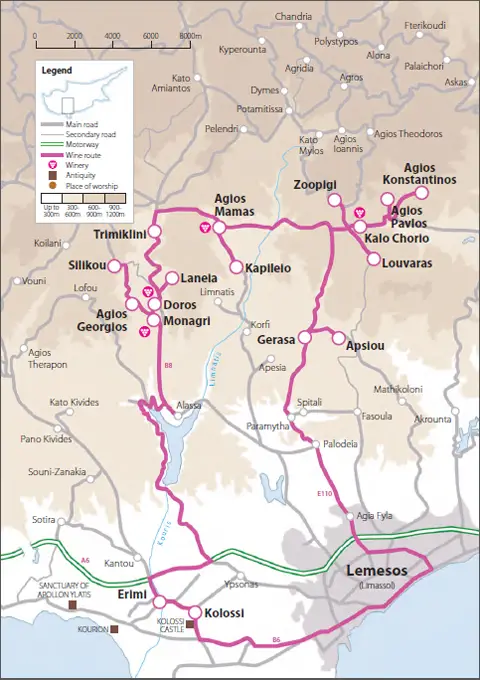
source: visitcyprus.com
1. Commandaria Wine Route
Location: Southern foothills of Troodos Mountains
Distance: Approximately 65 km
Villages: 14 designated Commandaria villages including Zoopigi, Agios Georgios, Kalo Chorio
Best for: History lovers and sweet wine enthusiasts
This route takes you through the villages that produce Commandaria, one of the world’s oldest named wines still in production. Richard the Lionheart served this wine at his wedding in 1191, calling it the “Wine of Kings.” The landscape here is stunning, with vineyards interspersed with almond and olive groves.
Must-visit wineries:
- Karseras Commandaria Winery
- Traditional producers in Zoopigi and Agios Georgios villages
Don’t miss: The Commandaria Historical Museum to learn about this legendary wine’s 800-year history.
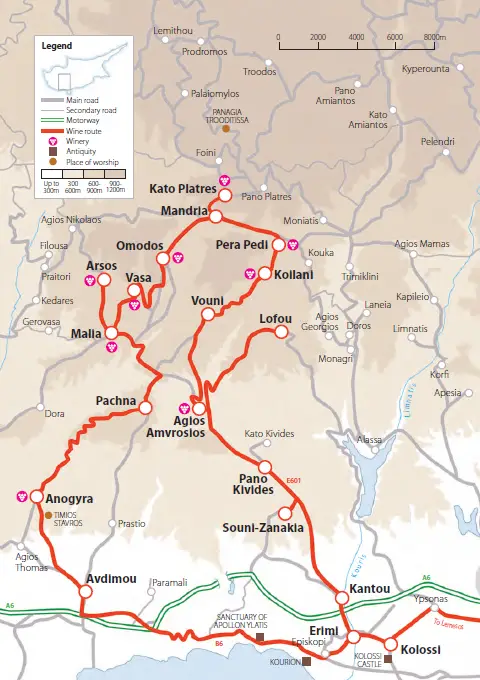
source: visitcyprus.com
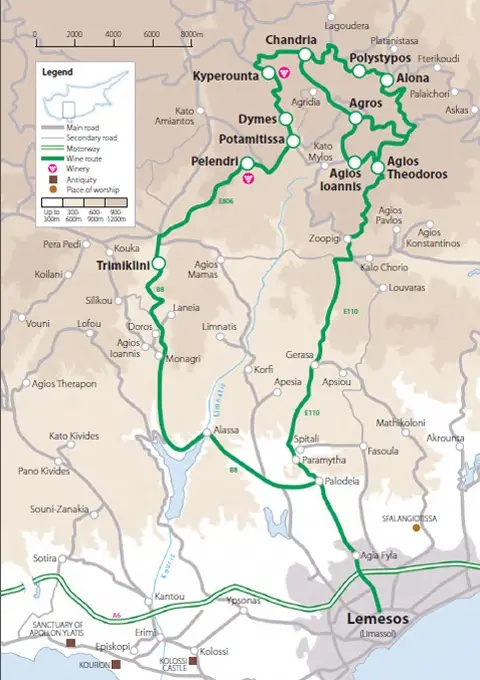
2. Krasochoria Lemesou (Limassol Wine Villages)
Location: Southern slopes of Troodos
Distance: Approximately 80 km
Villages: 20 wine villages including Omodos, Koilani, Vouni, Arsos
Best for: First-time visitors and those wanting variety
“Krasochoria” literally means “wine villages,” and this route represents the heartland of Cyprus wine production. You’ll find the highest concentration of wineries here, from boutique producers to established names. The route passes through charming villages with cobblestone streets, traditional tavernas, and stunning mountain views.
Must-visit wineries:
Don’t miss: The village of Omodos with its historic monastery and traditional wine press.
source: visitcyprus.com
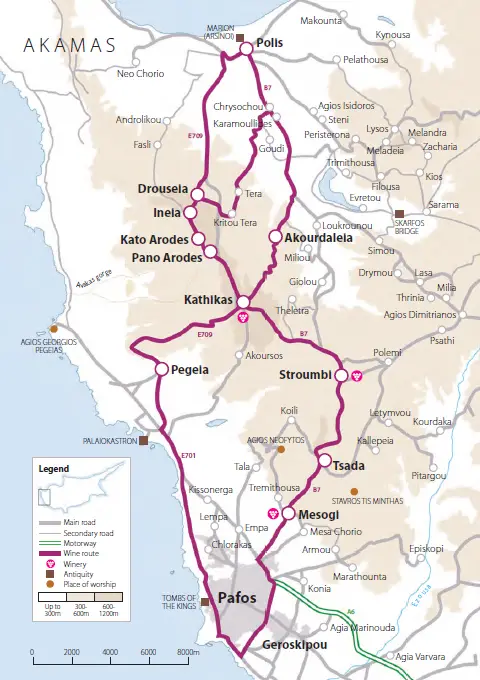
3. Pitsilia Wine Route
Location: Eastern Troodos Mountains
Distance: Approximately 90 km
Villages: 32 villages including Agros, Kyperounta, Pelendri
Best for: Serious wine enthusiasts and nature lovers
Pitsilia features some of Cyprus’s highest vineyards, reaching up to 1,400 meters elevation. This is where you’ll find some of the most exciting modern winemaking happening on the island. The dramatic elevation changes create diverse microclimates and stunning scenery.
Must-visit wineries:
- Kyperounda Winery
- Tsiakkas Winery (also accessible from this route)
Don’t miss: The rose festival in Agros village (May) and the traditional rose products.
source: visitcyprus.com
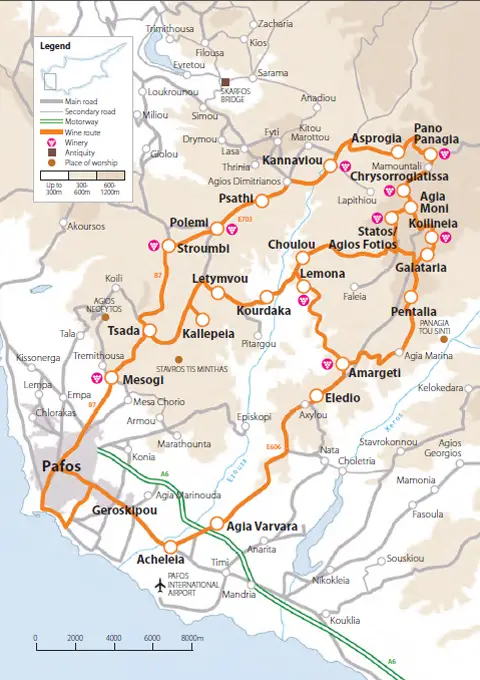
4. Laona-Akamas Wine Route
Location: Northwest Cyprus, Akamas Peninsula
Distance: Approximately 50 km
Villages: 6 villages including Kathikas, Kritou Terra, Pano Arodes
Best for: Coastal scenery and mineral-driven white wines
This route offers a different character with its coastal influence. Sea breezes moderate the heat, creating wines with distinctive freshness and minerality. The landscape combines vineyards with dramatic coastal cliffs and the wild beauty of the Akamas Peninsula.
Must-visit wineries:
Don’t miss: The Avakas Gorge and stunning coastal views from the villages.
source: visitcyprus.com
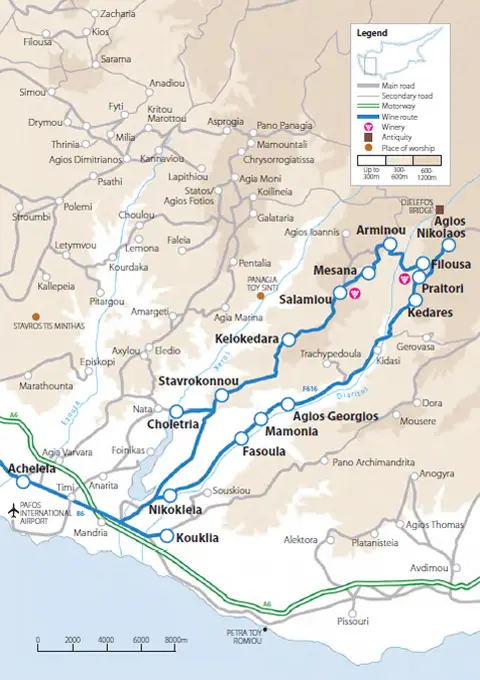
5. Vouni Panagias-Ampelitis Wine Route
Location: Western Troodos Mountains
Distance: Approximately 35 km
Villages: 4 villages including Panayia, Ambelitis
Best for: Sustainable wine tourism and scenic drives
This compact route features wineries committed to sustainable practices and solar energy. The area is less touristy than Limassol wine villages, offering a more tranquil experience.
Must-visit wineries:
Don’t miss: The Chrysoroyiatissa Monastery and its own winery.
source: visitcyprus.com
6. Diarizos Valley Wine Route
Location: Western Troodos foothills
Distance: Approximately 70 km
Villages: Multiple villages along the Diarizos River valley
Best for: Off-the-beaten-path exploration
This route follows the scenic Diarizos River valley through less-visited villages. It’s perfect for travelers who want to escape the crowds and discover hidden gems.
Must-visit wineries:
source: visitcyprus.com
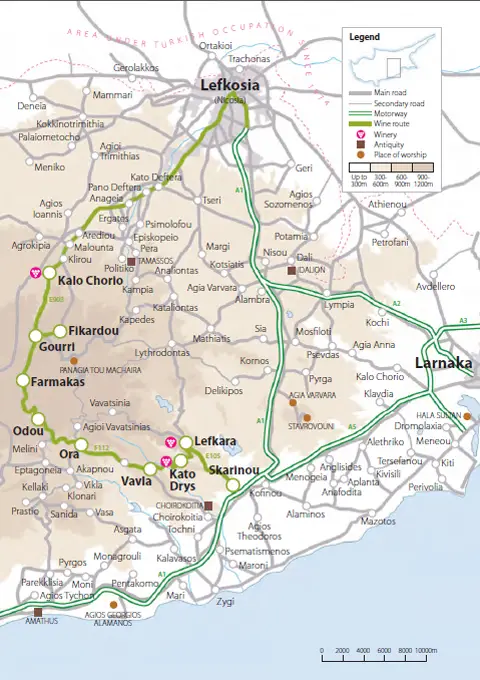
7. Mountainous Larnaka-Lefkosia Route
Location: Eastern and central Cyprus
Distance: Approximately 100 km
Villages: Villages in the Larnaka and Nicosia districts
Best for: Combining wine tourism with cultural sites
This route is less developed for wine tourism but offers opportunities to combine winery visits with archaeological sites and traditional villages in the island’s interior.
Must-visit wineries:
Planning Your Wine Tourism Itinerary
Now that you know the routes, let’s talk about how to actually plan your trip. Here are sample itineraries for different types of travelers.
Weekend Wine Getaway (2-3 Days)
Day 1: Limassol Wine Villages
- Morning: Drive to Omodos village, explore the monastery and traditional wine press
- Late morning: Visit Vlassides Winery for a tour and tasting
- Lunch: Traditional taverna in Omodos or Koilani
- Afternoon: Visit Zambartas Wineries
- Evening: Stay overnight in a wine village (Omodos or Platres)
Day 2: Commandaria Route
- Morning: Visit Commandaria villages and Karseras Winery
- Afternoon: Explore The Cyprus Wine Museum
- Evening: Return to Limassol or stay in wine country
Day 3: Pitsilia (Optional)
- Morning: Drive to Pitsilia region
- Visit Kyperounda Winery
- Afternoon: Return to Limassol or Larnaca for departure
Week-Long Wine Tour (7 Days)
Days 1-2: Limassol Wine Villages (explore multiple wineries, stay in Omodos)
Day 3: Commandaria Route and wine museums
Day 4: Pitsilia region (high-altitude vineyards)
Day 5: Laona-Akamas route (coastal wineries)
Day 6: Vouni Panagias-Ampelitis route
Day 7: Relaxation day or visit Limassol city wineries and wine bars
Focused Experience (1 Day)
If you only have one day for wine tourism in Cyprus:
Option A: Limassol Wine Villages Circuit
- Visit 3 wineries in the Krasochoria Lemesou route
- Lunch in Omodos
- Explore one traditional village
- Return to Limassol by evening
Option B: Guided Wine Tour
- Book a full-day guided tour that handles driving and logistics
- Visit 3-4 wineries with a knowledgeable guide
- Includes lunch and transportation
Practical Information for Wine Tourism in Cyprus
Best Time to Visit
Spring (April-May)
- Pros: Perfect weather, vineyards in bloom, fewer crowds
- Cons: Not harvest season
- Best for: Scenic drives and comfortable winery visits
Summer (June-August)
- Pros: Long days, vibrant atmosphere, festivals
- Cons: Very hot (35-40°C), crowded
- Best for: Beach and wine combination trips
Autumn (September-October)
- Pros: Harvest season, wine festivals, ideal temperatures
- Cons: More crowded than spring
- Best for: Experiencing the harvest and crush
Winter (November-March)
- Pros: Quiet, authentic experiences, lower prices
- Cons: Some wineries have reduced hours, cooler weather
- Best for: Budget travelers and those seeking solitude
Peak season for wine tourism in Cyprus: September-October (harvest) and April-May (spring)
Getting Around
Rental Car (Recommended)
- Most flexible option for exploring wine routes
- Essential for visiting multiple wineries
- GPS or offline maps recommended
- Important: Don’t drink and drive. Use spittoons at tastings or designate a driver
Organized Tours
- Half-day tours: €50-80 per person
- Full-day tours: €80-120 per person
- Private tours: €200-400 for small groups
- Includes transportation, guide, and usually lunch
Taxi or Private Driver
- Hire a driver for the day: €150-250
- Allows you to taste without driving concerns
- Can customize your itinerary
Public Transportation
- Limited and not practical for wine tourism
- Buses connect major towns but not wineries
Booking Winery Visits
Large/Established Wineries
- Often accept walk-ins during business hours
- Tours available at set times
- Check websites for hours and tour schedules
Boutique/Family Wineries
- Always call or email ahead
- Many are family-run with limited staff
- May close unexpectedly or require appointments
- More personal experience when you book
How to Book:
- Check the WineriesofCyprus.com directory for contact information
- Email or call 2-7 days in advance
- Specify: number of people, preferred time, any special requests
- Confirm the day before your visit
Costs and Budgeting
Winery Tastings:
- Basic tasting (3-5 wines): €5-10
- Premium tasting (5-7 wines): €10-20
- Tour + tasting: €15-30
- Many wineries waive fees with wine purchase
Wine Purchases:
- Everyday wines: €8-12 per bottle
- Quality wines: €12-25 per bottle
- Premium wines: €25-40 per bottle
- Commandaria: €15-40 per bottle
Food:
- Taverna lunch: €10-20 per person
- Winery restaurant: €20-35 per person
- Picnic supplies: €5-10 per person
Accommodation:
- Budget hotel/guesthouse: €40-70 per night
- Mid-range hotel: €70-120 per night
- Boutique wine country hotel: €100-200 per night
- Winery agrotourism: €80-150 per night
Daily Budget Estimate:
- Budget traveler: €60-100 per day
- Mid-range: €100-200 per day
- Luxury: €200+ per day
Where to Stay
Limassol City
- Pros: Central location, restaurants, nightlife, easy airport access
- Cons: Not in wine country itself
- Best for: Those wanting city amenities with day trips to wineries
Wine Villages (Omodos, Platres, Koilani)
- Pros: Authentic atmosphere, walking distance to some wineries, scenic
- Cons: Limited dining options, quieter evenings
- Best for: Immersive wine country experience
Winery Agrotourism
- Pros: Stay on a wine estate, unique experience, often includes breakfast
- Cons: Limited availability, may be remote
- Best for: Wine enthusiasts wanting total immersion
Paphos or Larnaca
- Pros: Beach access, good for combining wine and beach holidays
- Cons: Longer drives to main wine regions
- Best for: Multi-purpose trips
Wine Tourism Etiquette and Tips
Do’s
Do spit if you’re driving or visiting multiple wineries
- Spittoons are provided for a reason
- No one will judge you for using them
- It’s the professional and safe approach
Do ask questions
- Winemakers love sharing their passion
- Ask about the grapes, the vintage, the winemaking process
- There are no stupid questions
Do buy wine if you enjoyed the tasting
- It’s courteous and supports small producers
- Prices are often better at the winery than in shops
- Many wineries can ship internationally
Do dress appropriately
- Casual but neat clothing
- Closed-toe shoes (you may walk through vineyards or cellars)
- Layers (cellars can be cool even in summer)
Do take photos
- Most wineries welcome photography
- Ask permission before photographing people or proprietary equipment
- Share on social media and tag the winery
Don’ts
Don’t drink and drive
- Cyprus has strict drunk driving laws
- Use spittoons, hire a driver, or join a tour
Don’t wear strong perfume or cologne
- It interferes with wine aromas
- Winemakers and other tasters will appreciate it
Don’t show up unannounced at small wineries
- Always call ahead for boutique producers
- Respect that these are working businesses, often family-run
Don’t expect free tastings everywhere
- Tastings cost money because they involve time, expertise, and product
- Fees are reasonable and often waived with purchase
Don’t rush
- Wine tourism in Cyprus is about the experience, not checking boxes
- Take time to enjoy the scenery, conversations, and atmosphere
Combining Wine Tourism with Other Activities
One of the best things about wine tourism in Cyprus is how easily it combines with other experiences.
Wine and Culture
Byzantine Monasteries
- Many wine routes pass historic monasteries
- Kykkos Monastery, Chrysoroyiatissa Monastery
- Some monasteries have their own wineries
Traditional Villages
- Explore cobblestone streets and local crafts
- Visit traditional coffee shops (kafeneia)
- Experience authentic Cypriot village life
Archaeological Sites
- Ancient Kourion near Limassol
- Paphos Archaeological Park
- Combine history with wine
Wine and Nature
Hiking
- Troodos Mountains offer excellent hiking trails
- Artemis Trail, Atalante Trail
- Combine morning hikes with afternoon winery visits
Beaches
- Morning at the beach, afternoon in wine country
- Limassol and Paphos are close to wine regions
- Perfect for summer wine tourism
Cycling
- Some wine routes are popular with cyclists
- Rent bikes in wine villages
- Challenging but rewarding
Wine and Food
Cooking Classes
- Some wineries offer cooking classes
- Learn to pair Cypriot cuisine with local wines
- Take recipes home
Restaurant Experiences
- Many wineries have on-site restaurants
- Traditional tavernas in wine villages
- Farm-to-table dining experiences
Food Festivals
- Combine wine tourism with local food festivals
- Olive festivals, honey festivals, village celebrations
Wine Festivals and Events
Wine tourism in Cyprus peaks during festival season. Here are the major events:
Limassol Wine Festival
- When: Late August to early September
- Where: Limassol Municipal Gardens
- What: Multiple wineries, live music, food, cultural performances
- Cost: Small entrance fee
Commandaria Festival
- When: August/September
- Where: Commandaria villages
- What: Celebrate the historic wine with tastings, music, dancing
Village Wine Festivals
- Various villages host smaller festivals throughout summer and autumn
- Check local calendars for specific dates
- Authentic, local atmosphere
Harvest Celebrations
- September-October
- Some wineries host harvest events
- Opportunity to participate in grape picking
Sustainable Wine Tourism
Many Cyprus wineries are embracing sustainable practices. If eco-friendly travel is important to you, look for:
Organic Certification
- Several wineries practice organic viticulture
- Look for EU organic certification
Solar Energy
- Vouni Panayia Winery and others use solar power
- Reduces carbon footprint
Water Conservation
- Drip irrigation systems
- Rainwater collection
Biodiversity
- Wineries maintaining natural habitats
- Avoiding pesticides and herbicides
Supporting Small Producers
- Family wineries often have smaller environmental footprints
- Your visits directly support local communities
Special Interest Wine Tourism
For Serious Wine Collectors
- Focus on boutique producers making limited quantities
- Ask about library vintages and special releases
- Inquire about wine club memberships or mailing lists
- Visit Zambartas, Vlassides, Kyperounda
For Couples and Romance
- Book private tastings at sunset
- Stay at winery agrotourism accommodations
- Combine with spa experiences in Troodos
- Consider Vasilikon Winery for stunning views
For Families
- Look for wineries with outdoor spaces and activities
- Some wineries welcome children (call ahead)
- Combine with nature activities kids will enjoy
- Pack snacks and entertainment for car rides
For Solo Travelers
- Join group tours to meet other wine enthusiasts
- Stay in wine villages with communal atmospheres
- Wineries are welcoming to solo visitors
- Consider hiring a guide for the day
Resources for Planning Wine Tourism in Cyprus
Before You Go:
- Browse WineriesofCyprus.com to research wineries
- Download offline maps of wine routes
- Book accommodations in advance (especially peak season)
- Reserve tours and tastings at popular wineries
Apps and Tools:
- Google Maps (works well in Cyprus)
- Wine route maps from Cyprus Tourism Organisation
- Translation app (though English is widely spoken)
Useful Websites:
- Visit Cyprus – Official tourism site
- WineriesofCyprus.com – Complete winery directory
- Individual winery websites for booking
Books and Guides:
- Look for Cyprus wine guides at local bookshops
- Many wineries have informational brochures
Conclusion: Your Cyprus Wine Adventure Awaits
Wine tourism in Cyprus offers something truly special: a chance to explore one of the world’s oldest wine regions that’s simultaneously one of its most innovative. You’ll taste wines made from grapes that grow nowhere else on Earth, meet passionate winemakers who blend ancient traditions with modern techniques, and experience scenery that ranges from mountain villages to Mediterranean coastlines.
Whether you spend a weekend exploring the Limassol wine villages, a week traversing all seven wine routes, or just an afternoon at a single boutique winery, you’ll discover why Cyprus is emerging as one of Europe’s most exciting wine destinations. The combination of authentic experiences, exceptional value, stunning landscapes, and unique wines creates memories that last long after the last glass is poured.
The best part? You don’t need to be a wine expert to enjoy wine tourism in Cyprus. You just need curiosity, a sense of adventure, and an appreciation for good wine, beautiful scenery, and warm hospitality.
Ready to plan your Cyprus wine adventure? Explore our complete Cyprus Winery Directory to discover producers across all regions, read reviews, check opening hours, and map your perfect wine route. Your journey through Cyprus wine country starts here.
Frequently Asked Questions
How many days do I need for wine tourism in Cyprus?
A weekend (2-3 days) is enough to explore one or two wine routes and visit 5-8 wineries. A week allows you to experience multiple regions, attend festivals, and really immerse yourself in wine country. Even a single day can provide a memorable introduction if you focus on one route like the Limassol Wine Villages. The key is quality over quantity, visiting 2-3 wineries properly is better than rushing through 6-7.
Do I need to book winery visits in advance?
It depends on the winery. Larger, established wineries often accept walk-ins during business hours, though tours may require booking. Boutique and family-run wineries typically require advance notice since they may have limited staff or irregular hours. As a general rule, always call or email 2-7 days ahead, especially for smaller producers. This ensures someone will be available to host you properly and you won’t be disappointed by a closed door.
Can I do wine tourism in Cyprus without a car?
It’s challenging but not impossible. Organized wine tours are the best option if you don’t want to rent a car, they handle all transportation and allow you to taste without driving concerns. Taxis or private drivers can also be hired for the day. Public transportation is limited and doesn’t reach most wineries, making it impractical for wine tourism. If you do rent a car, remember to use spittoons at tastings or designate a non-drinking driver, as Cyprus has strict drunk driving laws.